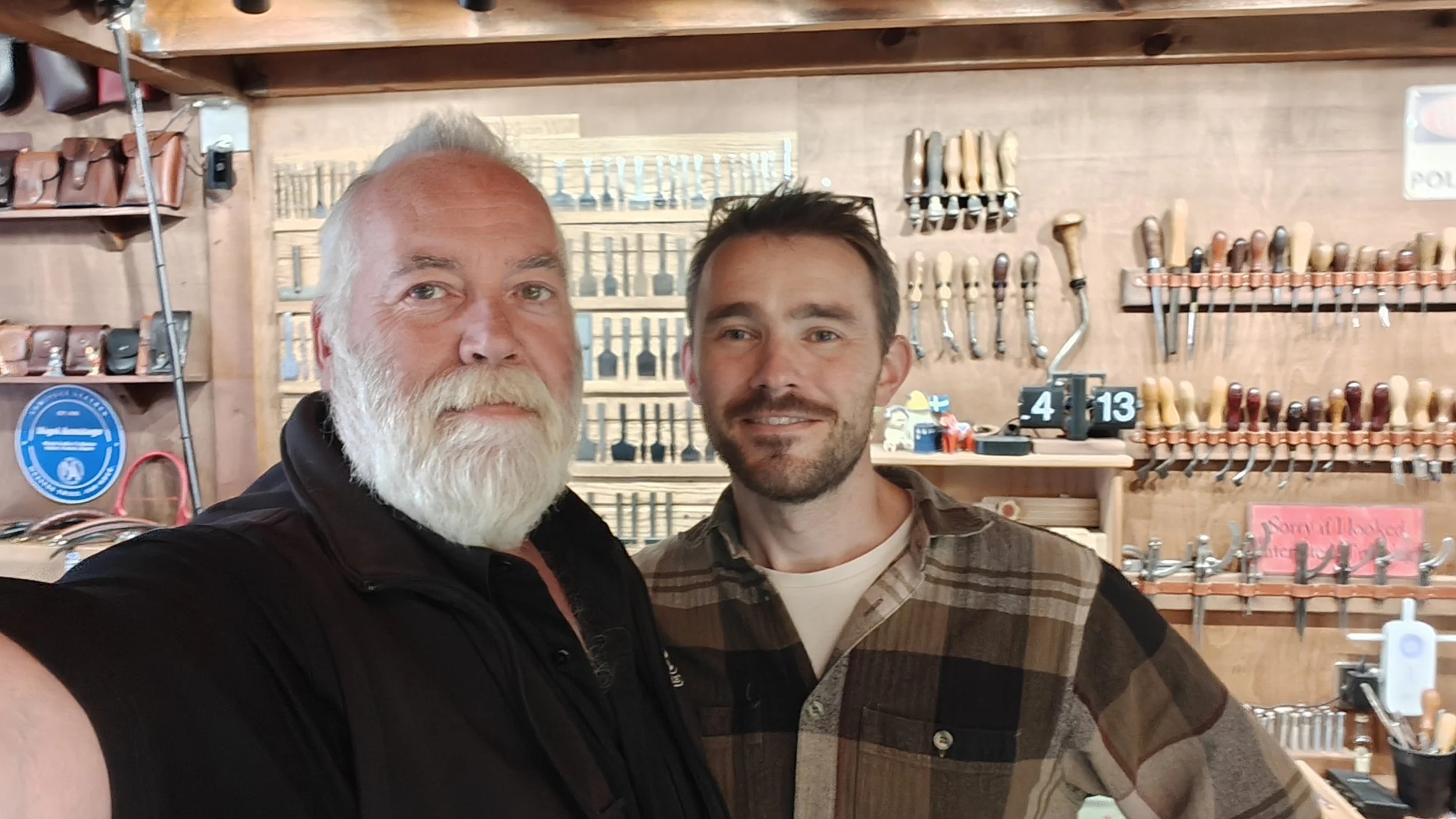
When I started leatherwork, I had this vision of a guild in an old shed or farmhouse. Symbols of its heritage hanging outside, dangling in the wind and rain. A fireplace keeping the space warm, filling the air with the scent of oak wood. All kinds of decorations hanging on the walls and workbenches. Tools you don't recognise, leaving you wondering what the hell they're used for. Maybe even different guild members, each doing their own thing. All sorts of sounds, each one drawing you in, trying to capture your attention or lure you further inside.
And among all this, you're trying to find the master craftsman himself.
Of course, this almost sounds like a description of a scene from some fictional world.
But…
Two weeks ago, I flew to Birmingham, England, driving to a place called Yoxall. This is where I would be staying for four days, two of which I would spend with a man named Nigel Armitage, in his workshop.
So, what is this place, and who is Nigel Armitage?
Let's dive in.
I wanted to develop my stitching skills and put them to the test by making a belt. There was no better place to go than Nigel's workshop. Hours and hours of instructional material can be found online, as well as on his paid learning platform, Secrets of the Workshop.
If you're anything like me, that title grabs your attention straight away.
But online videos can't beat the experience of learning face-to-face, with your teacher right there beside you.
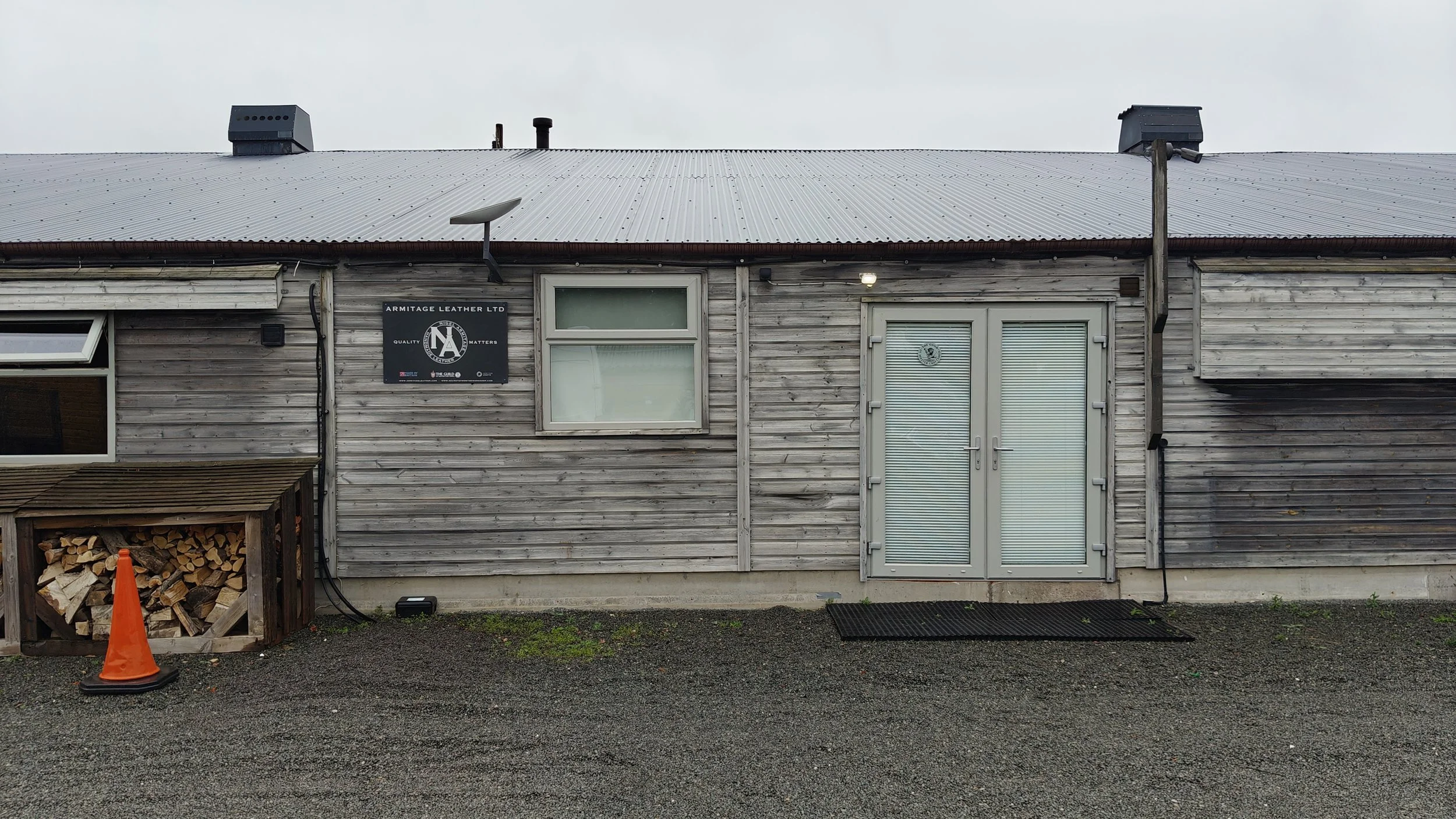
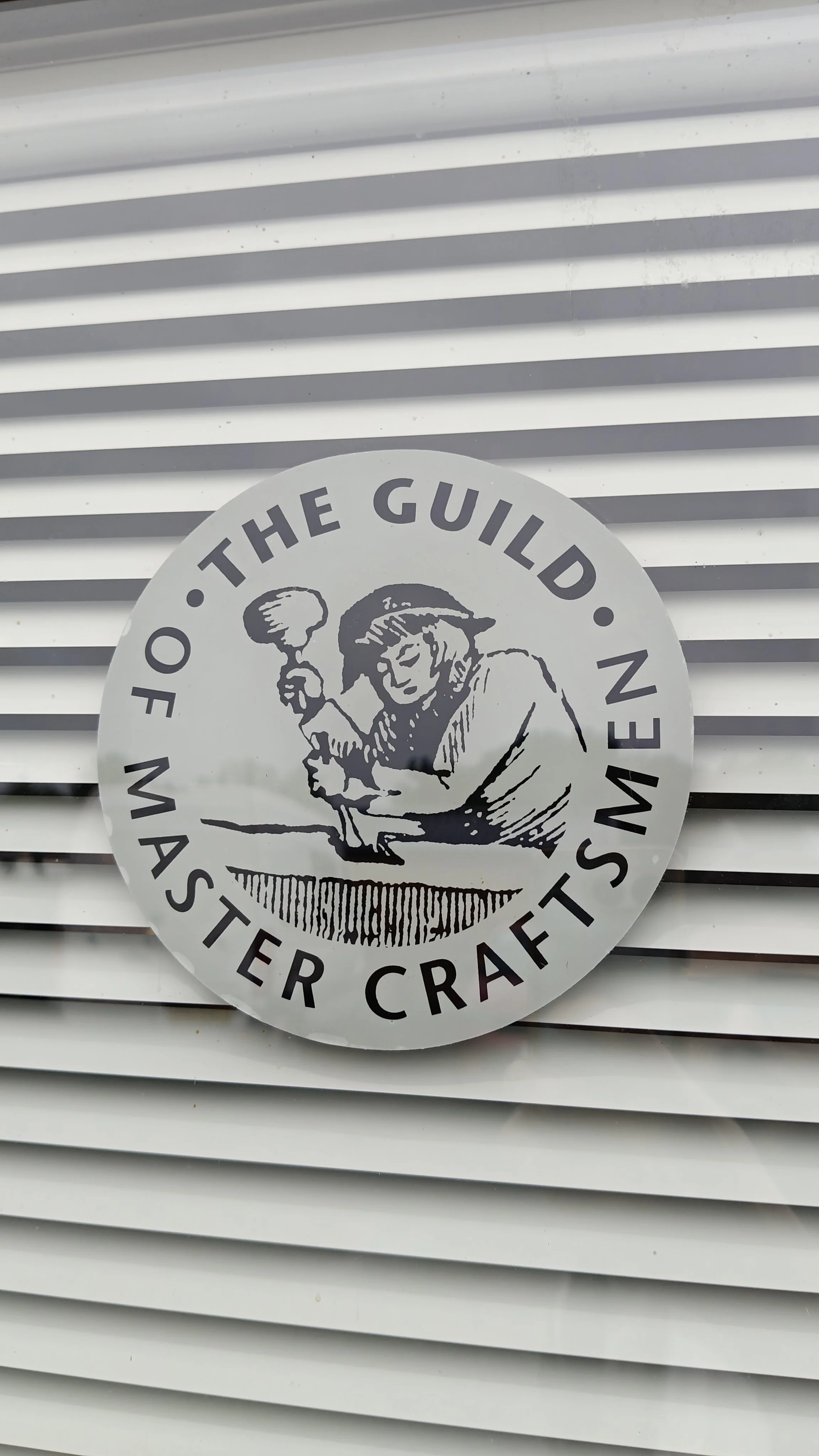
As I approached the entrance to his workshop, I saw his logo and the woodcut emblem of a master craftsman. My journey of learning was about to begin.
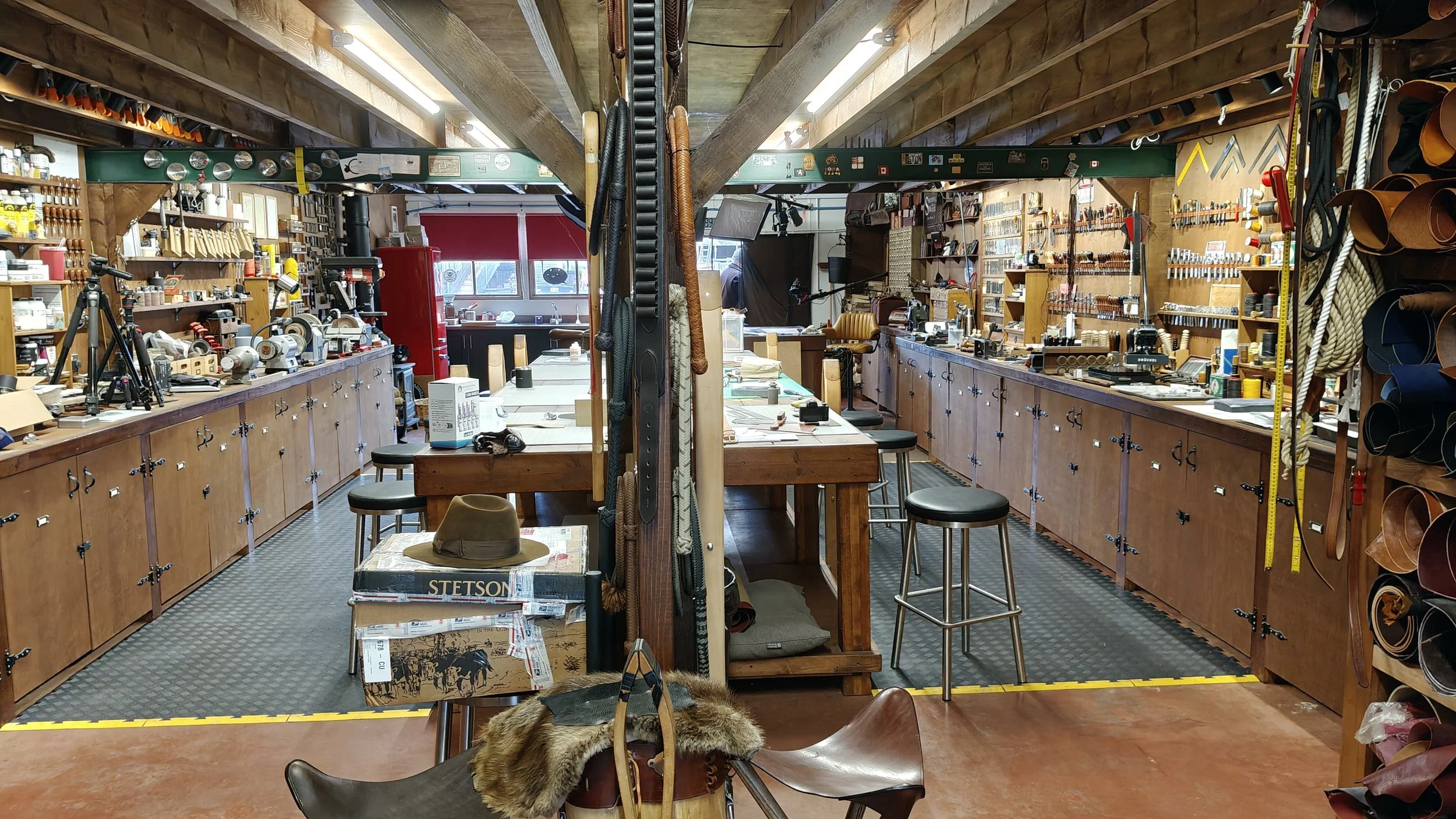
When I opened the door and walked into his workshop, my vision, as described above, began to feel more real than ever.
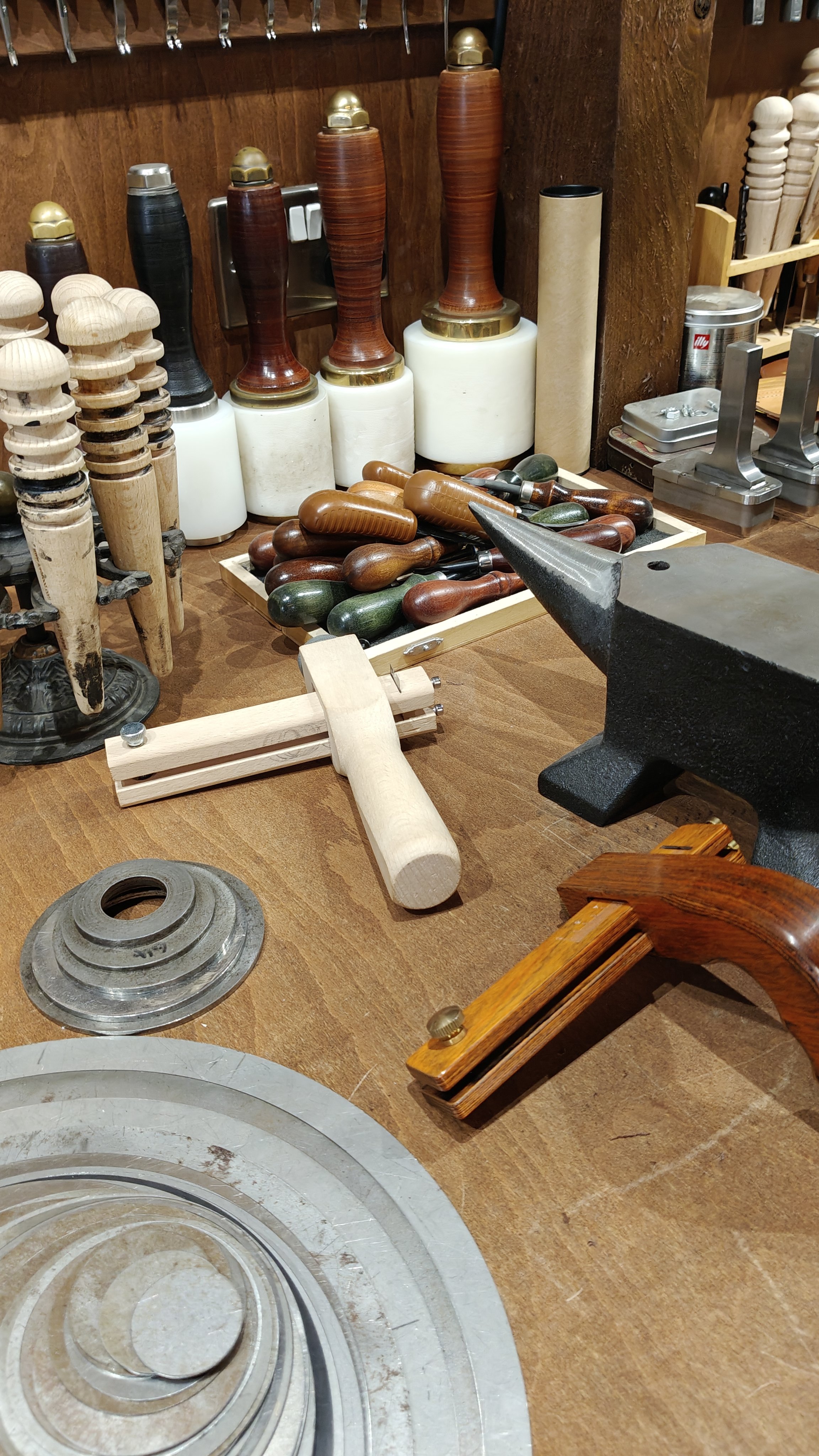
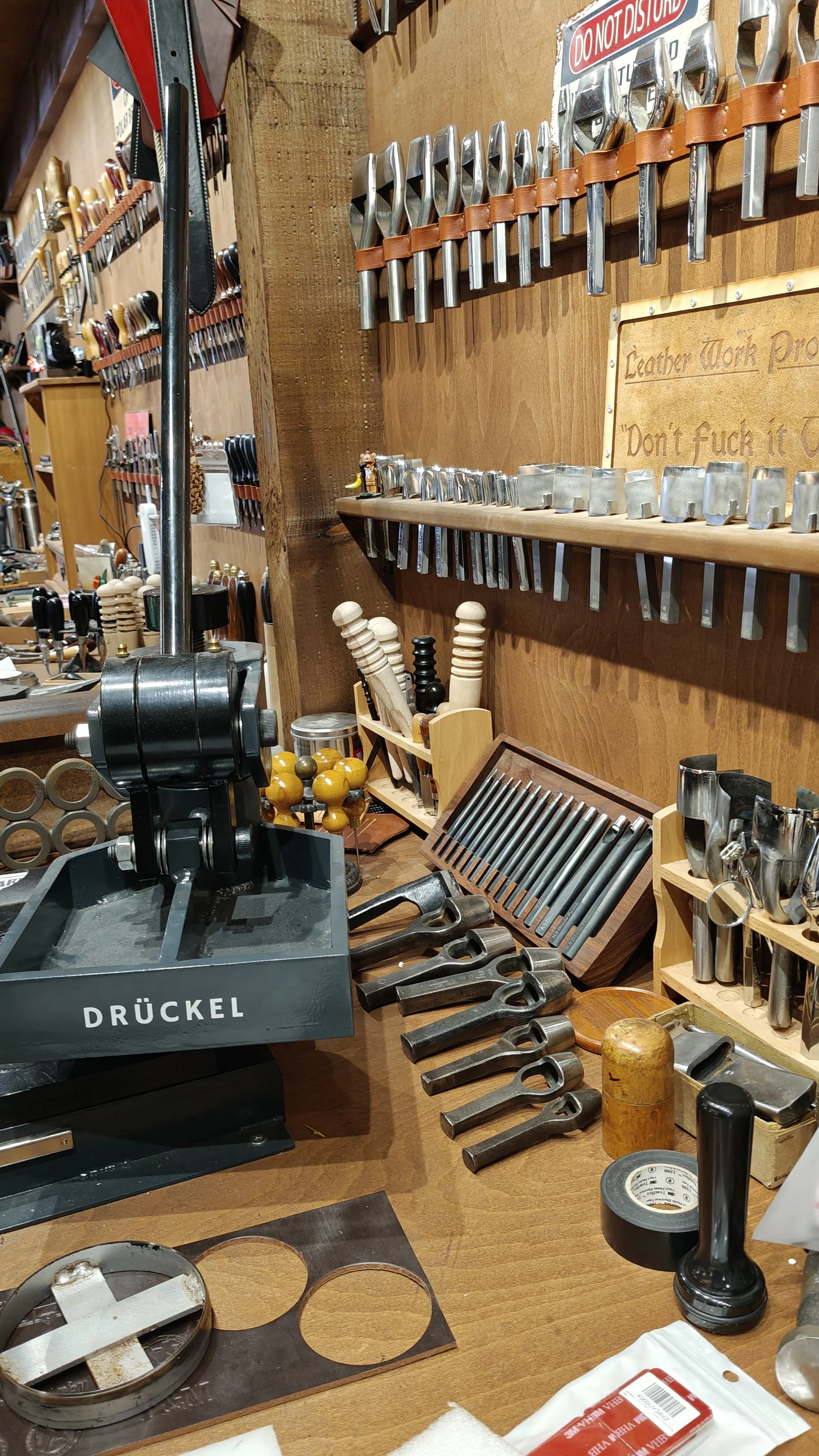
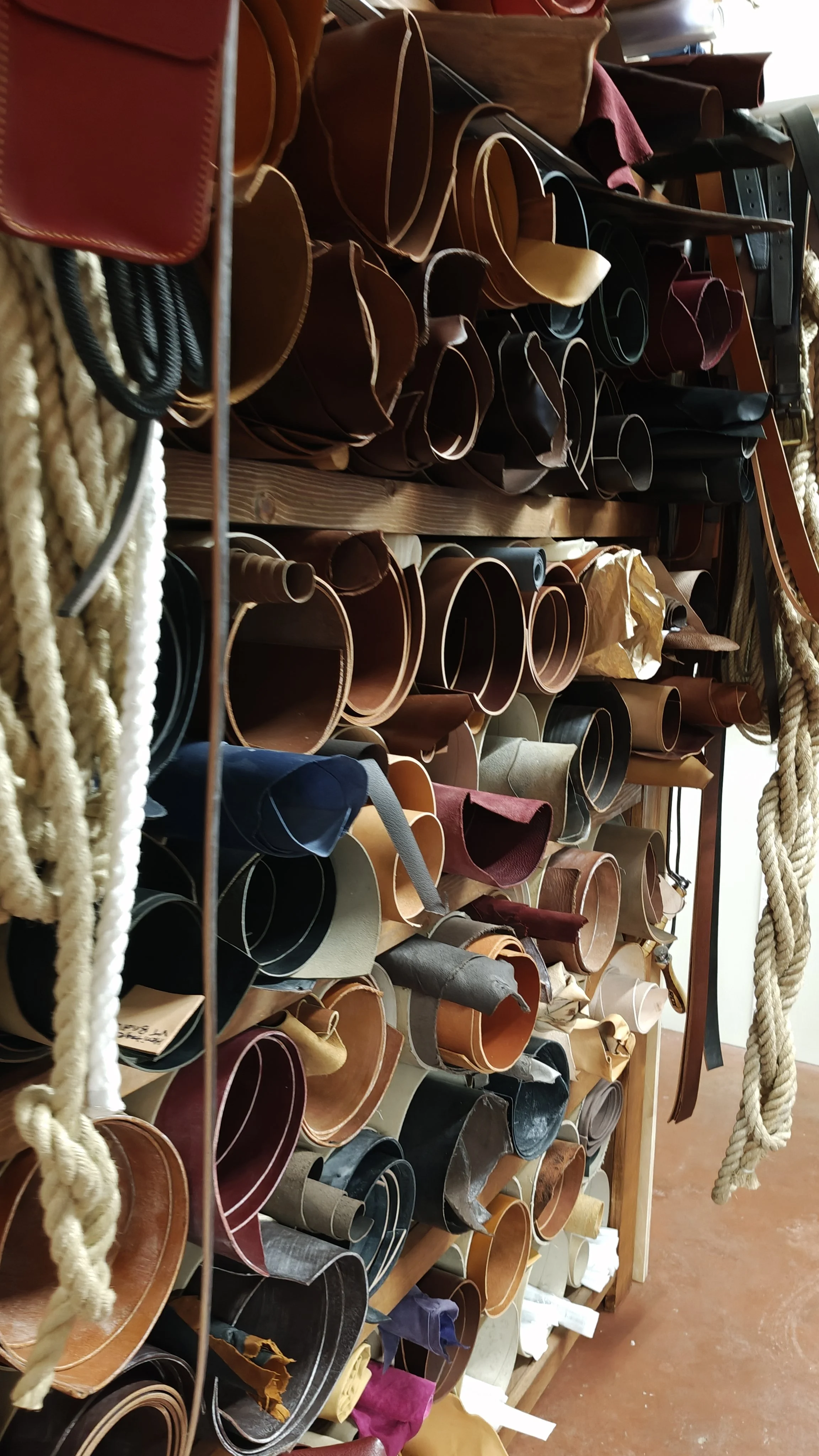
Everywhere you looked, there was something to catch your eye. Tools, bags, belts, machines, cutting boards, more tools and, well… leather, of course. Nothing beats the smell of lots and lots of waxed and oiled leather.
Well, maybe one thing.
A combination of good coffee and cigars.
As I looked around for Nigel himself, I found him standing at the back, doing just that. Smoking a cigar and enjoying a coffee.
This just keeps getting better and better!
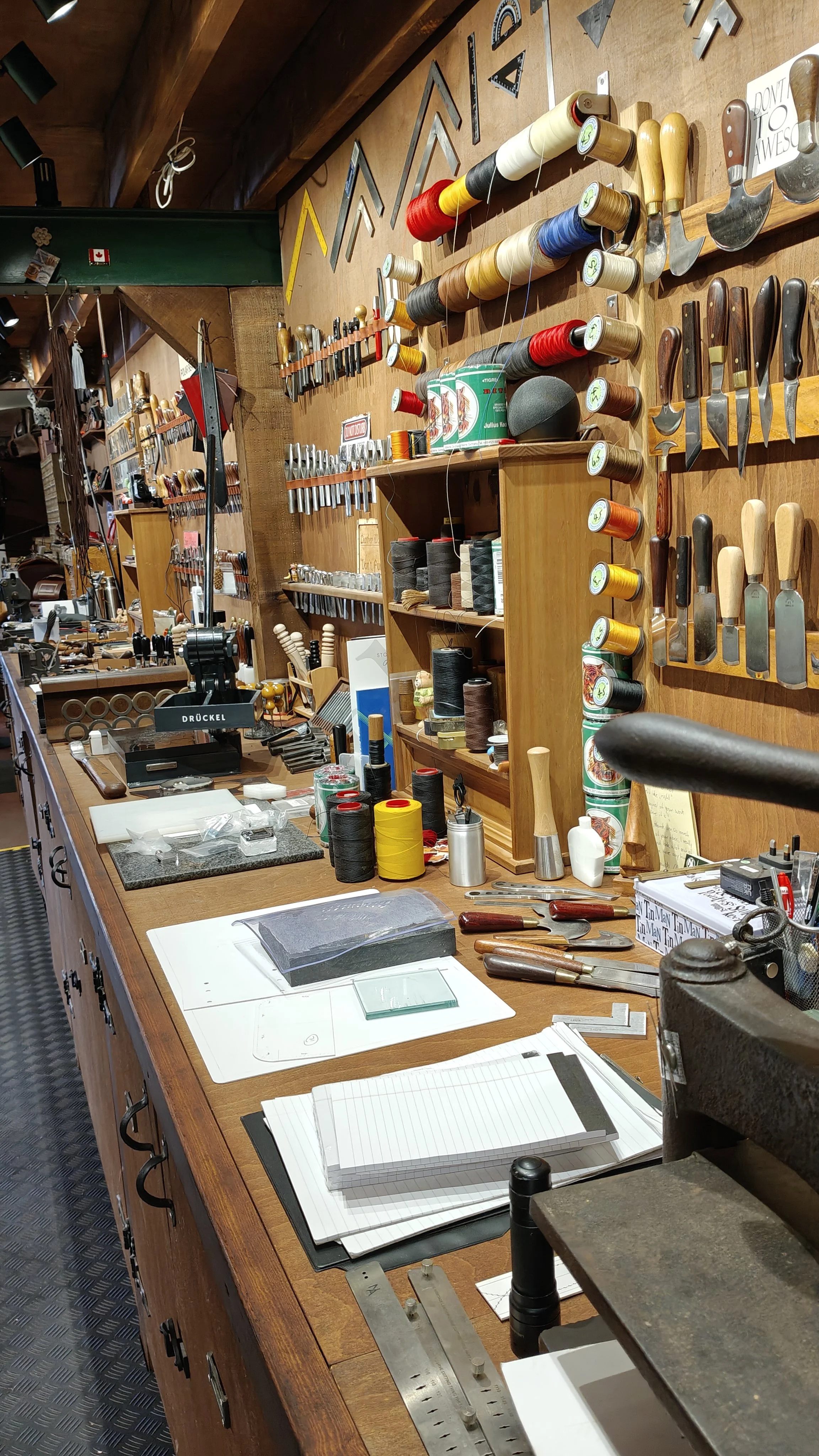
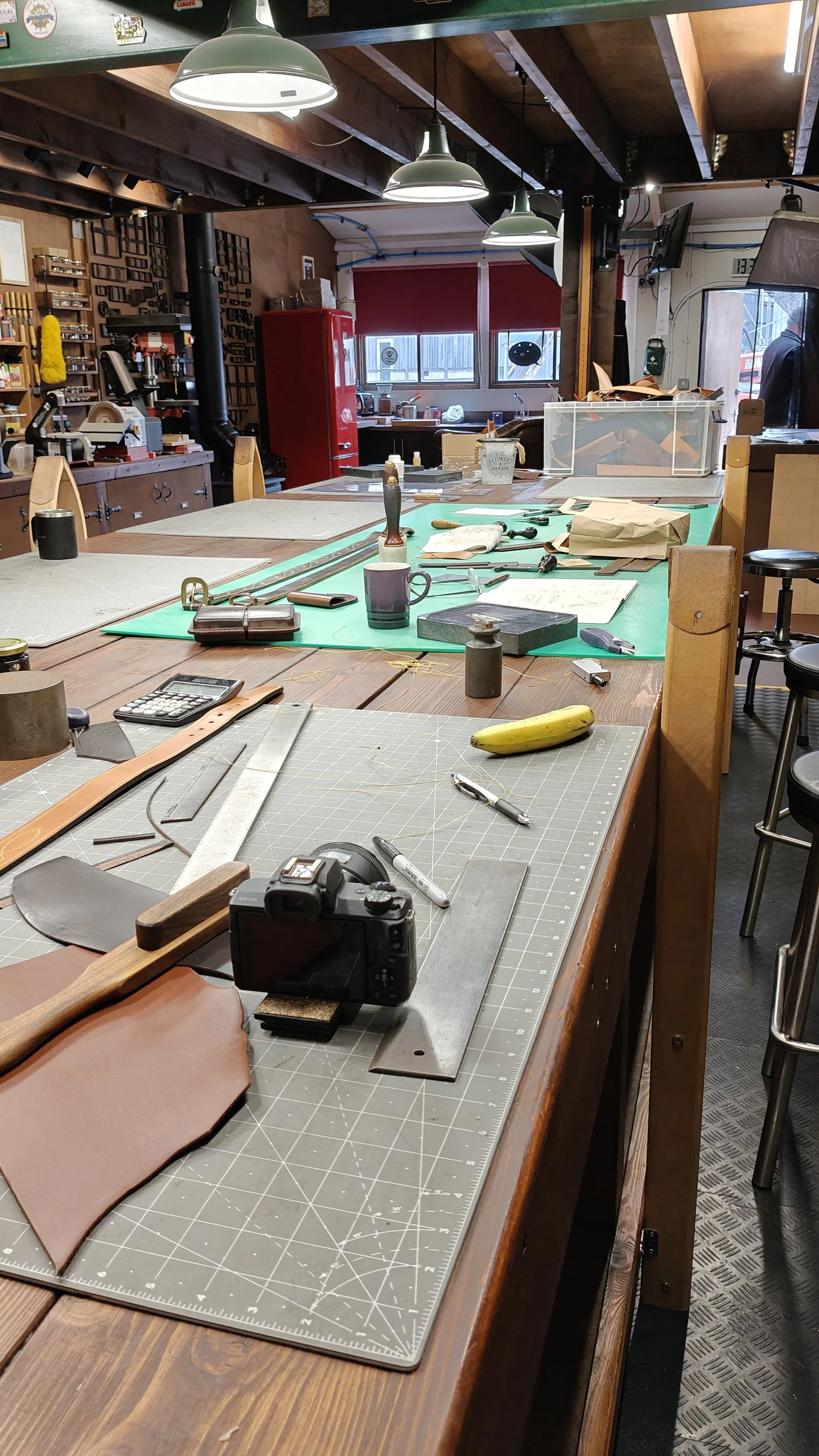
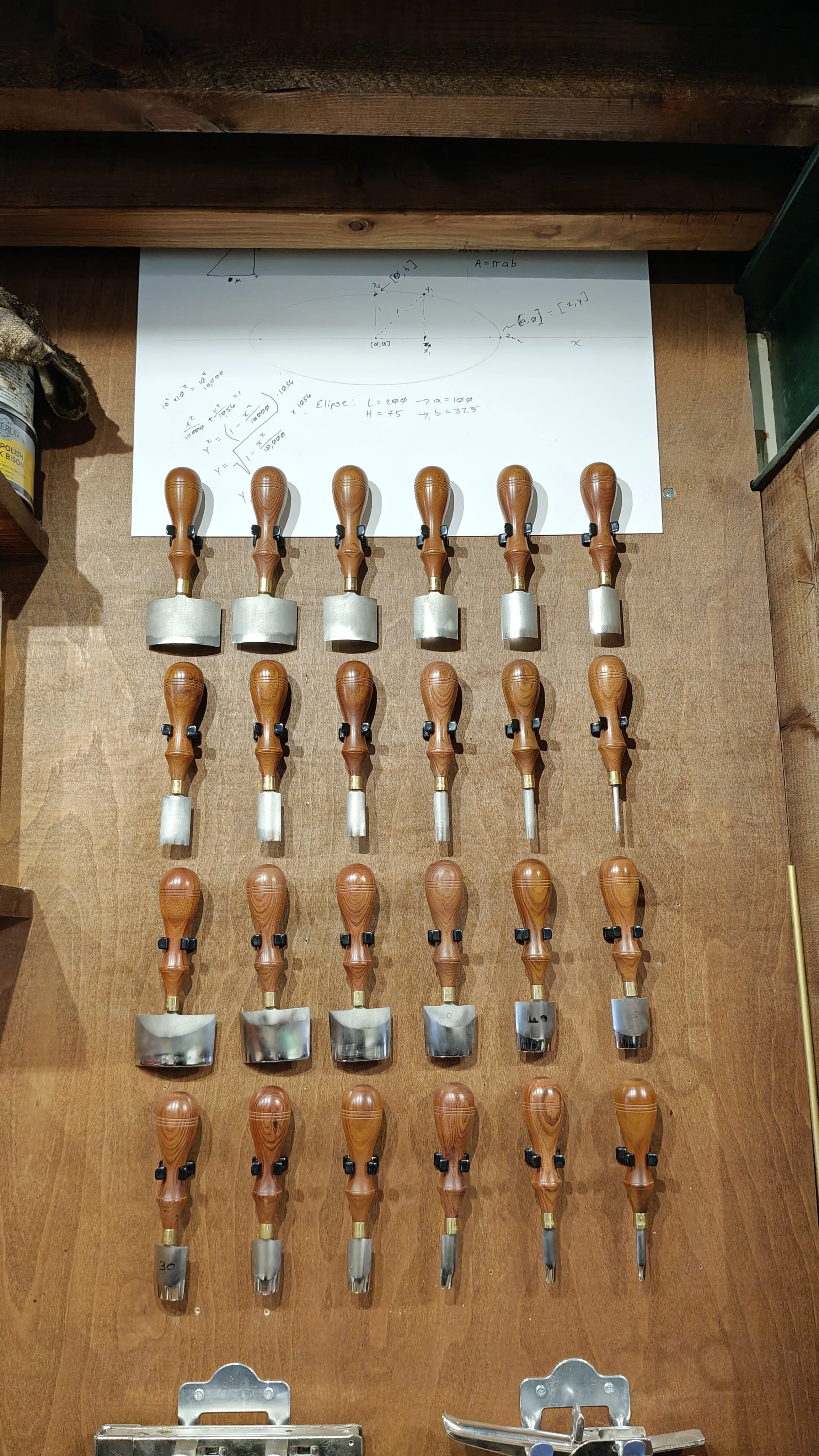
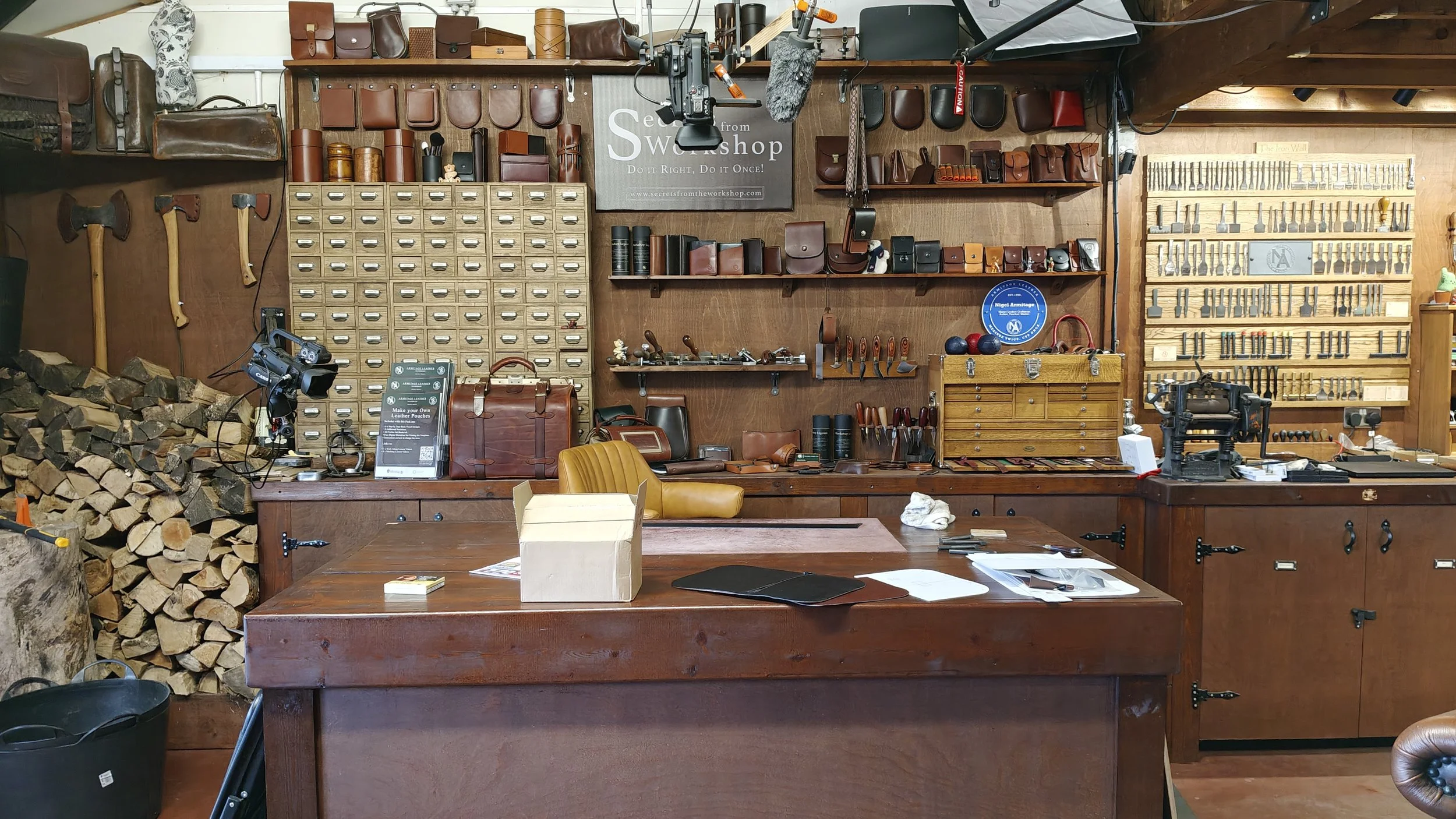
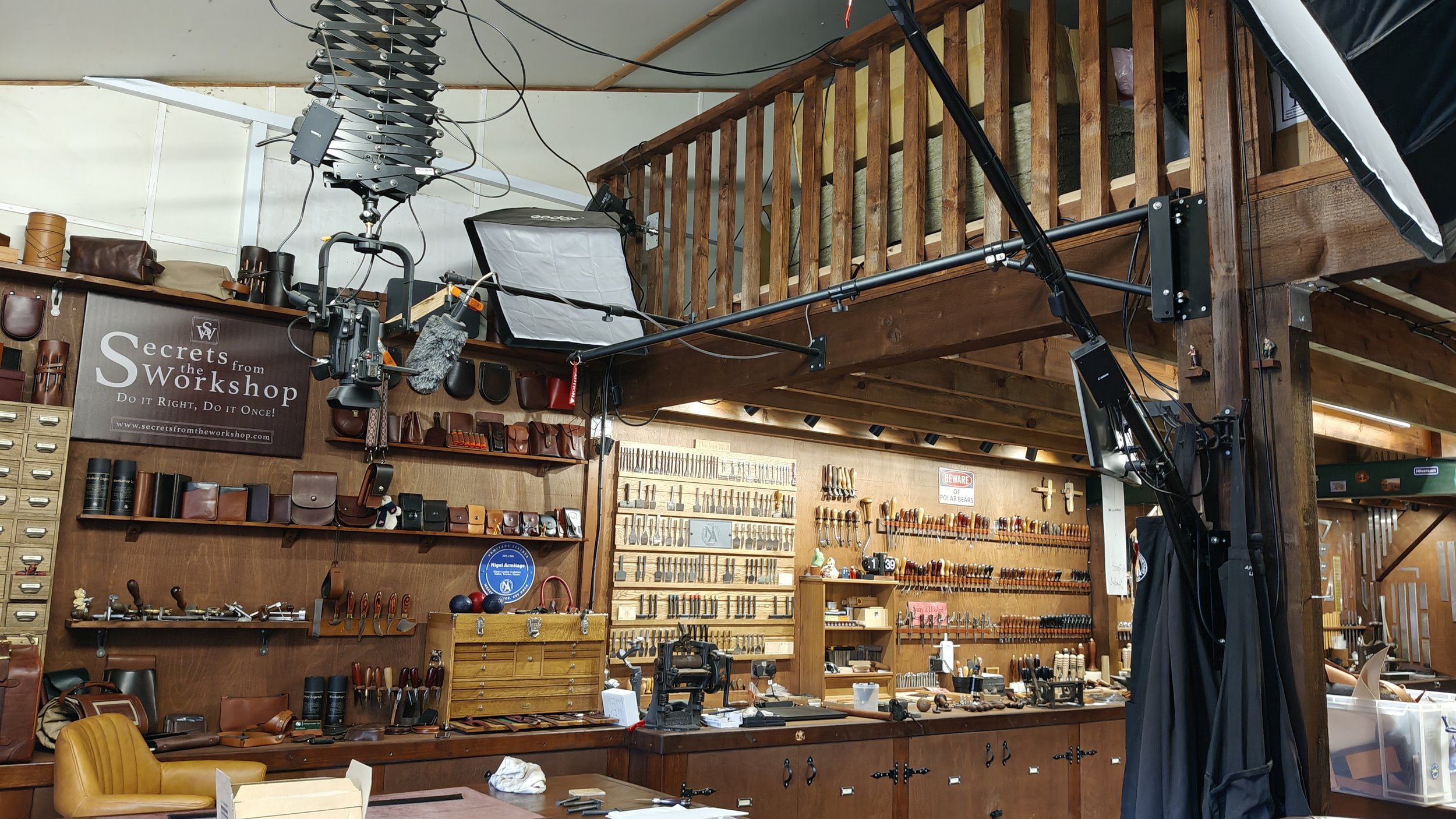
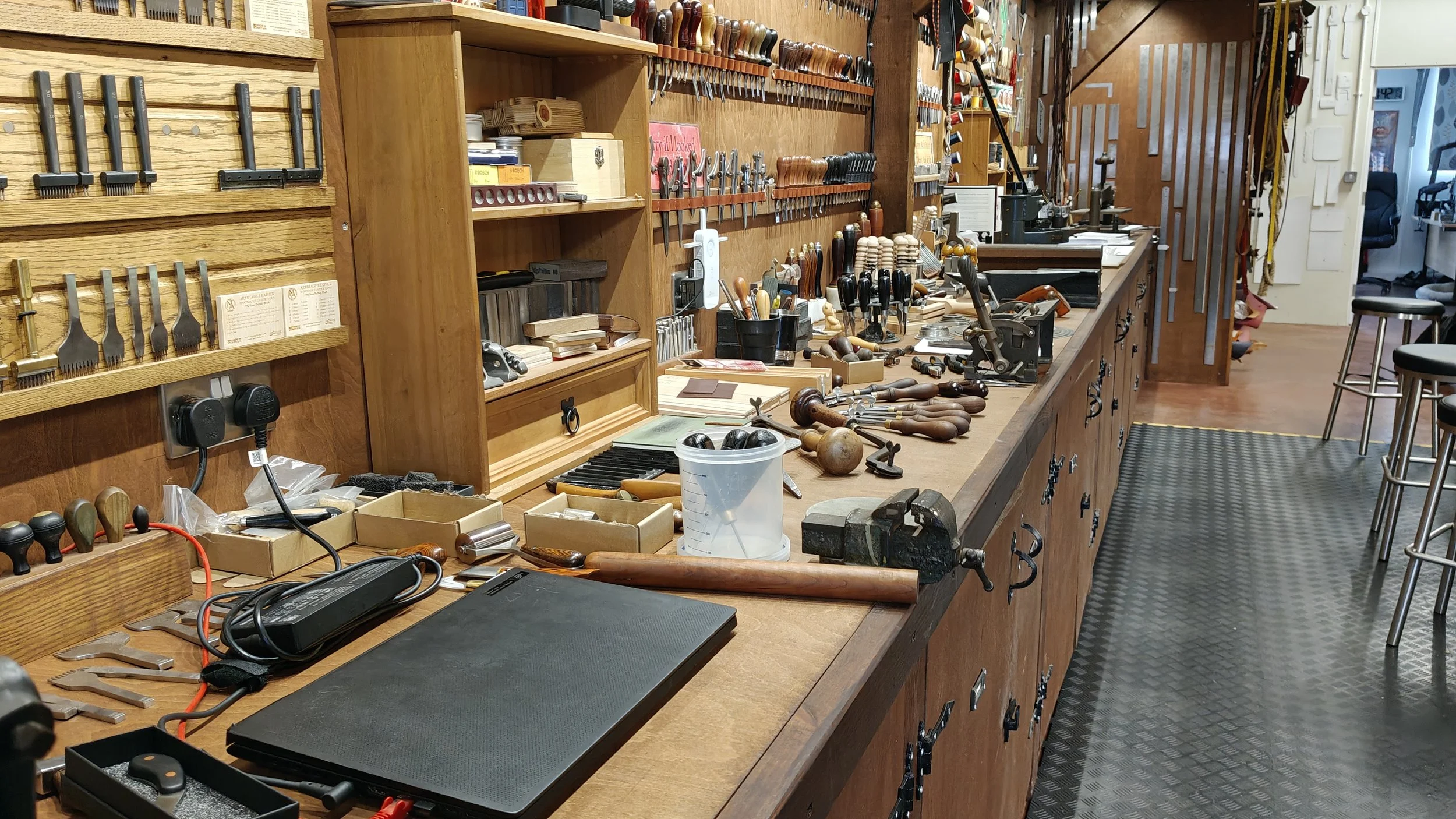
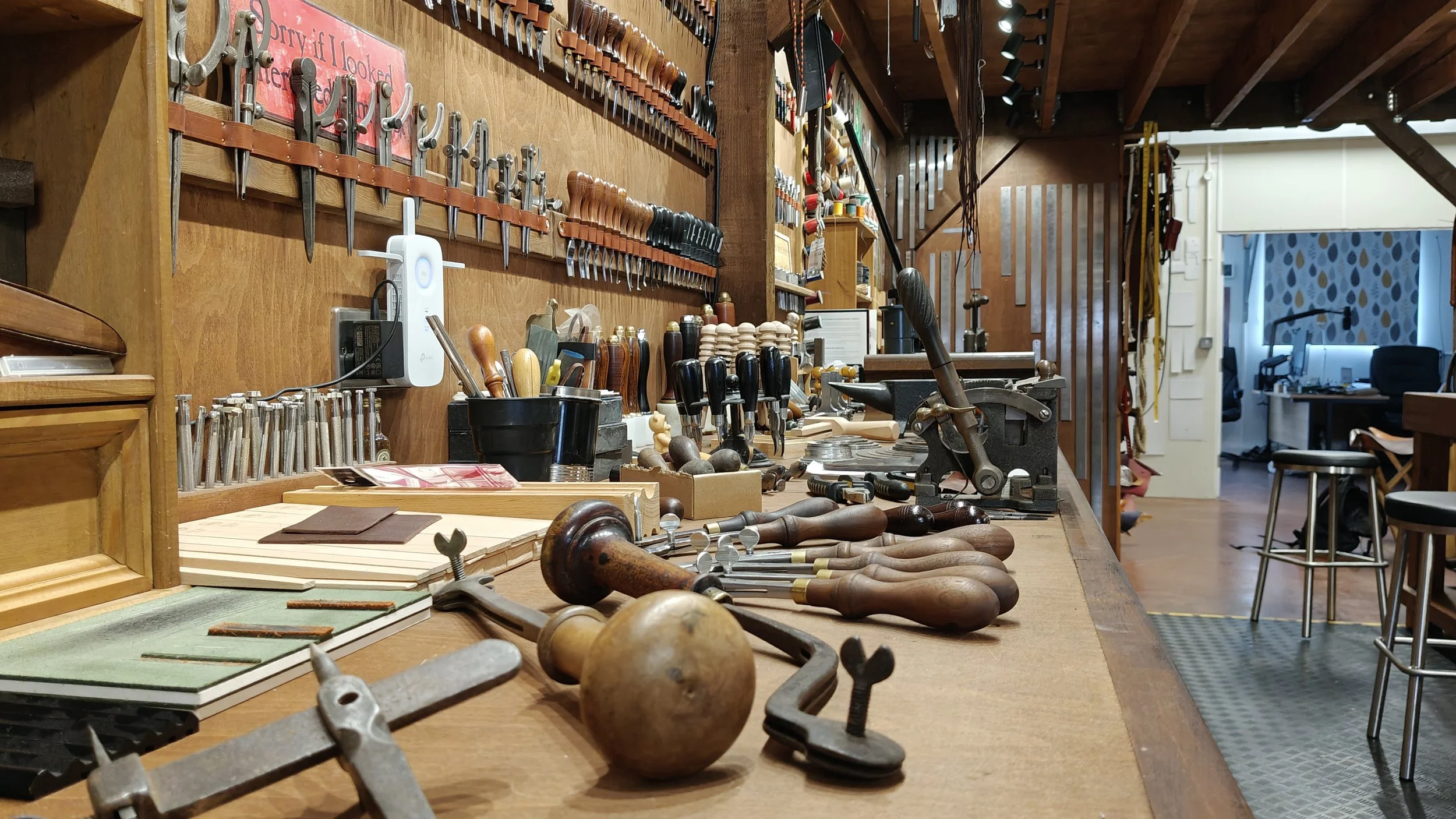
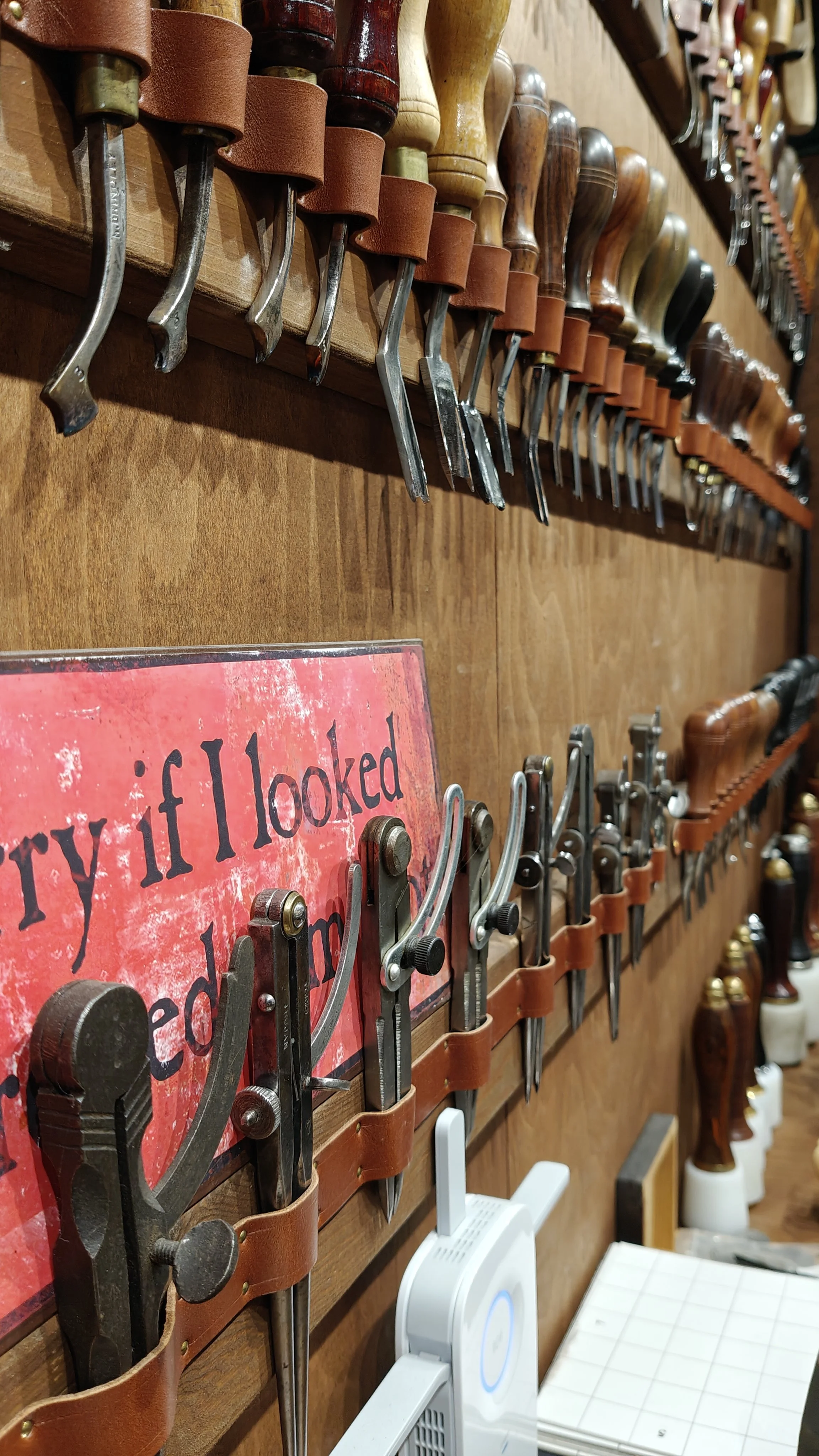
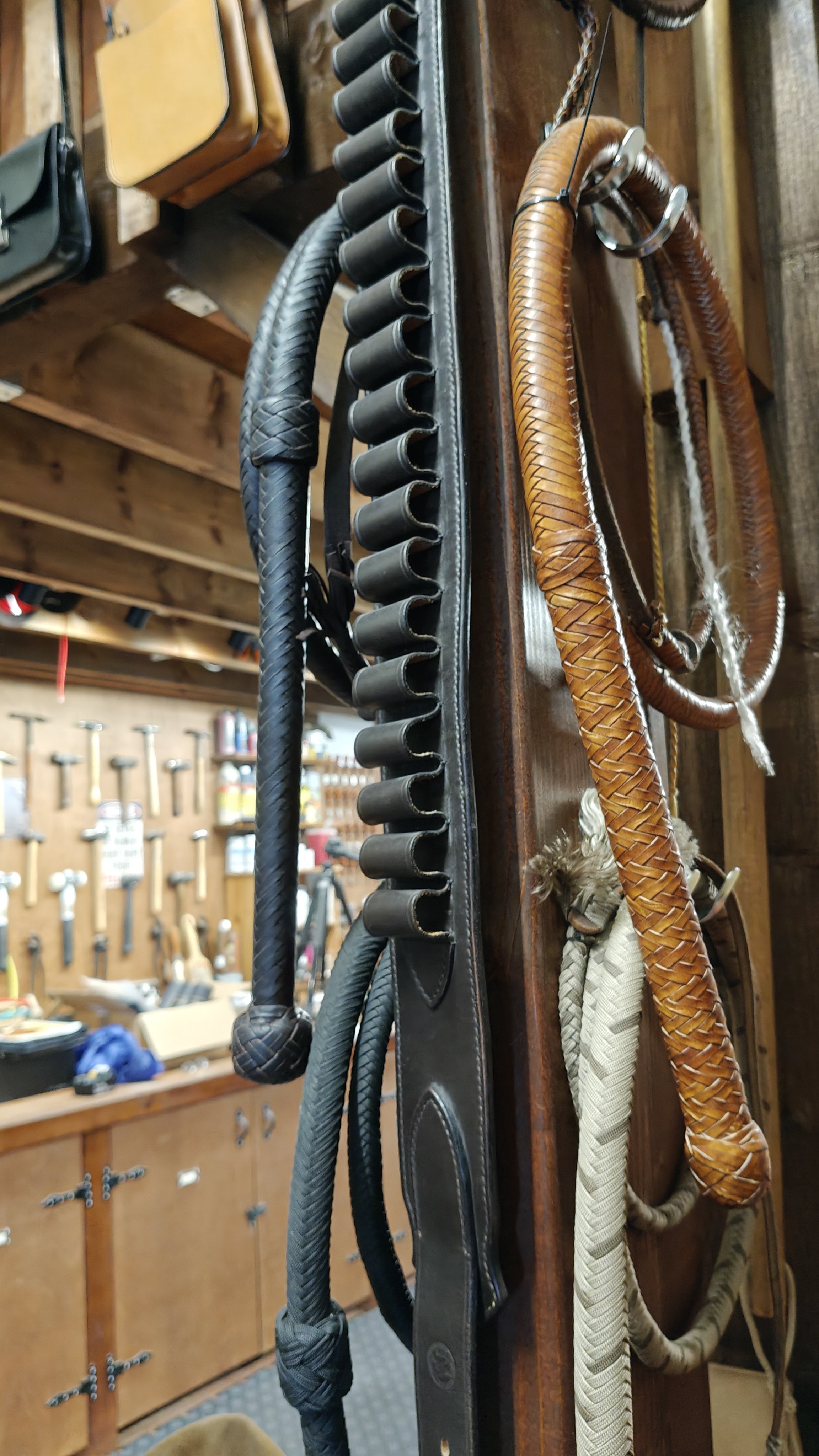
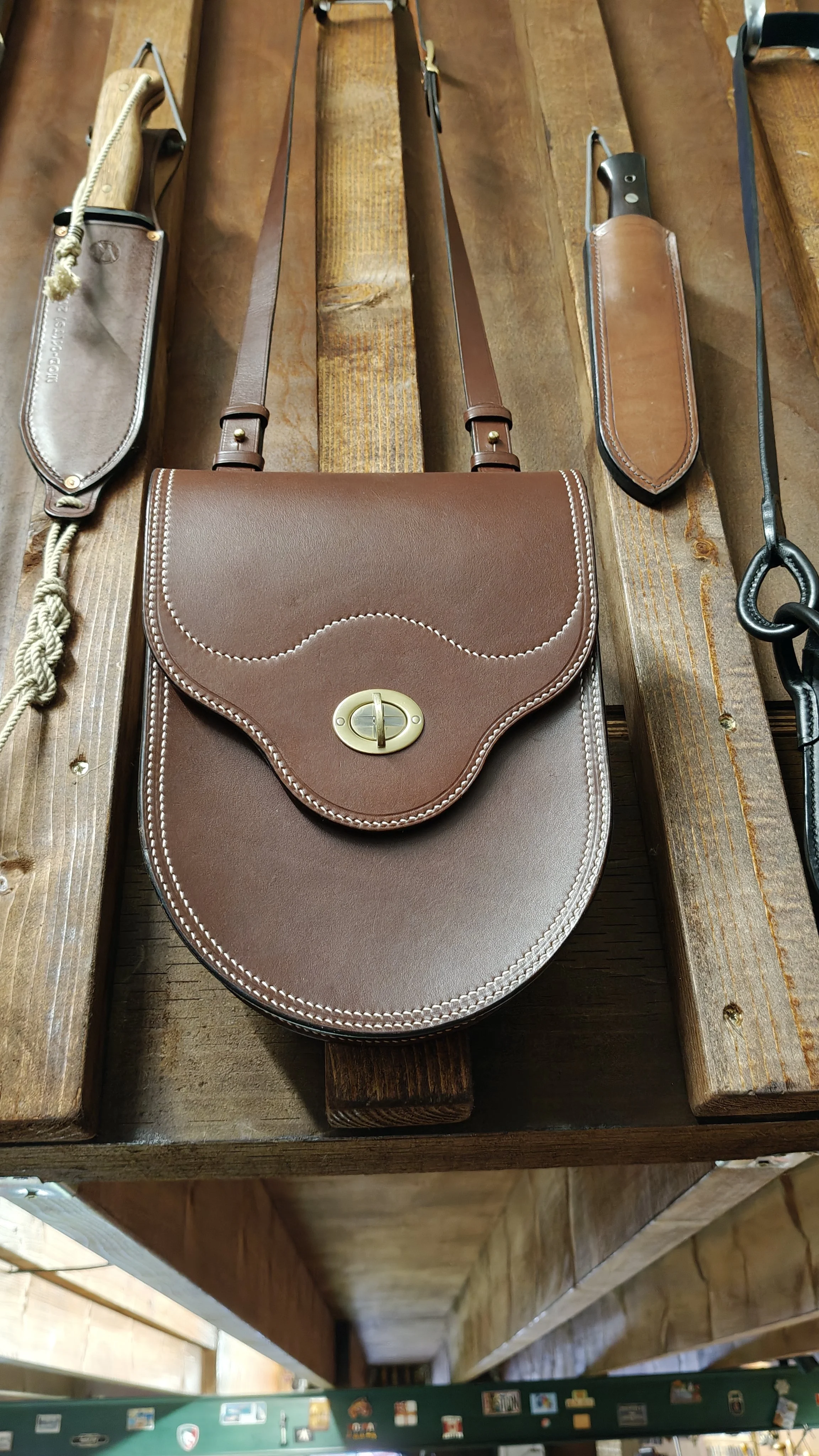
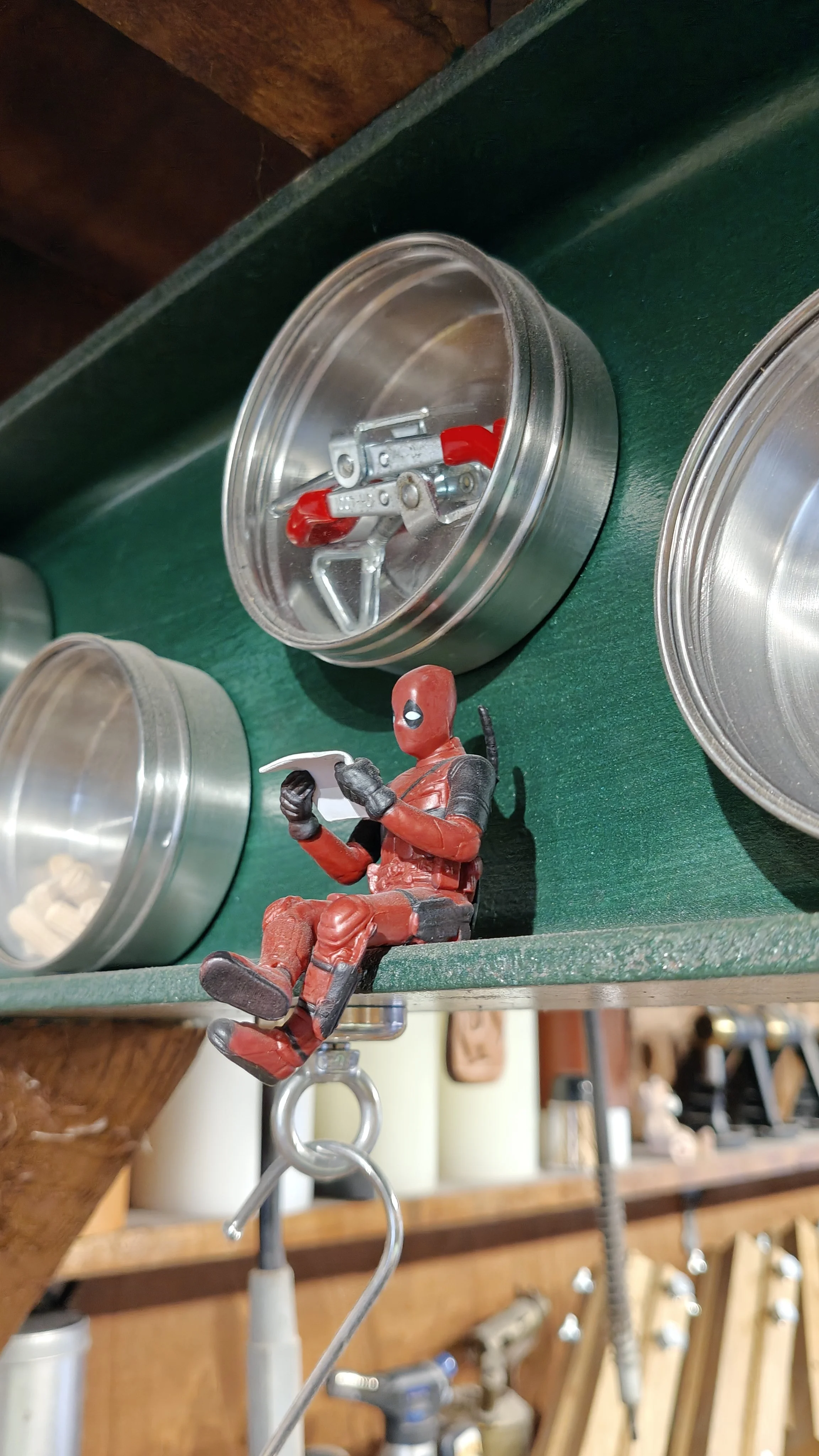
We talked and drank coffee while inspecting the leather goods I had brought with me.
Before I knew it, the lesson was already underway. We talked through the various steps involved in stitching leather, using my own work as a reference along the way.
I knew this wasn't going to be a class where you just sit around talking. So he put me to the test.
Walk the talk.
To give you, the reader, an idea of what that meant:
I stitched that day…
the entire day.
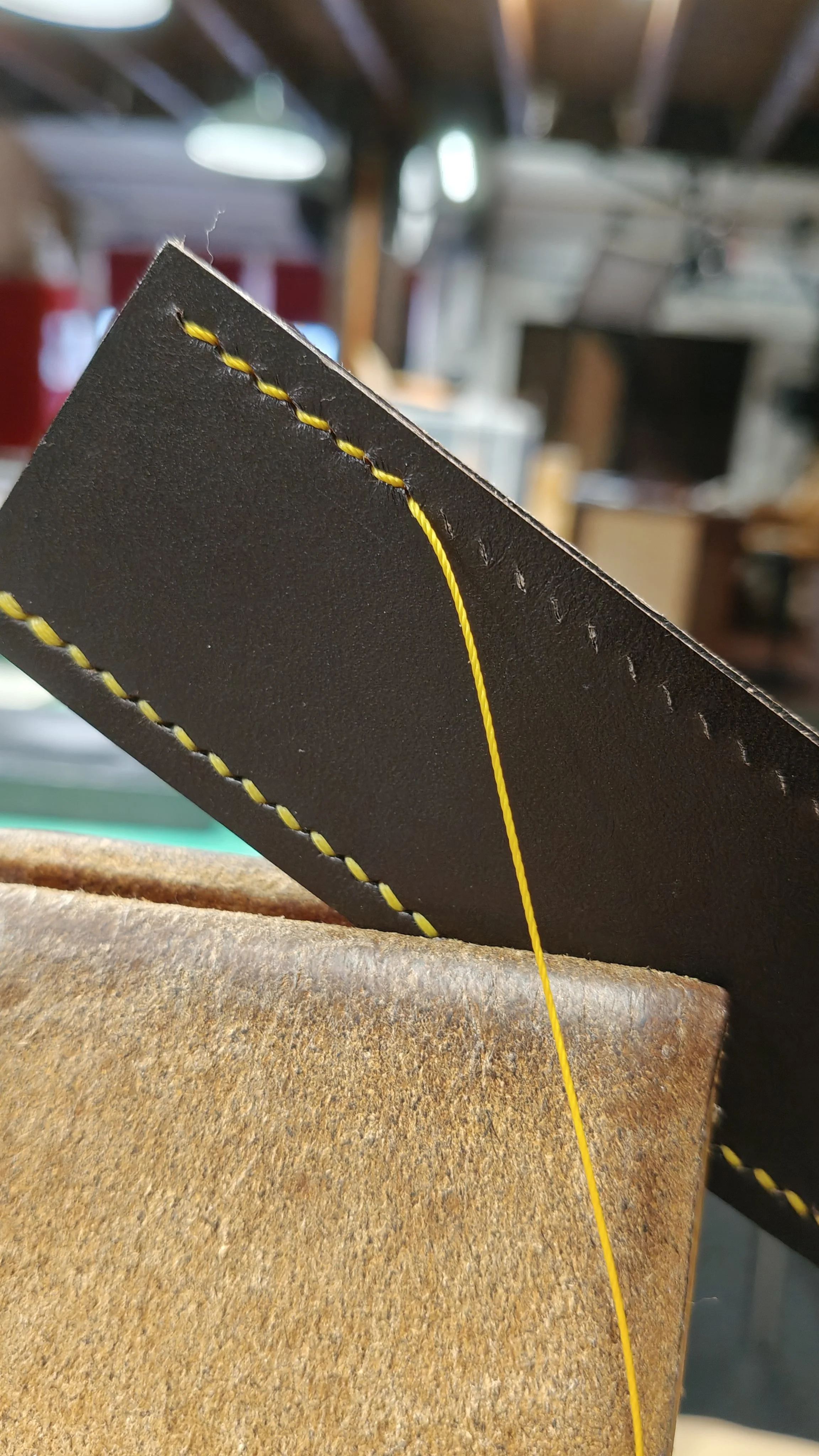
I worked on multiple rows of stitching. For each section of each row, Nigel had me perform different exercises. Some sections had to be stitched left-handed, others right-handed. Sometimes, the right side took priority, at other times, the left side took priority.
Sometimes, while I was stitching, he would stop me, take the leather out of the stitching pony and turn it around. Then I had to continue stitching along the same row, maintaining the same consistency as before.
That tiny little hole we make in the leather — and I mean really tiny — gets an awful lot of attention and detail.
But for good reason.
We want to develop a consistent way of working so that we can achieve a consistent result in the end.
Every now and then, we'd take little side quests, telling stories along the way. I don't know if you've ever had a really good history teacher, but damn, this man can tell a story.
From Greek and Viking belts to what would later become known as the London Lap, and from outlaw cowboys to the rangers who would later wear their own style of gunslinger belt.
We talked and stitched our way through day one.
Well, I did my best to get ready for day two.
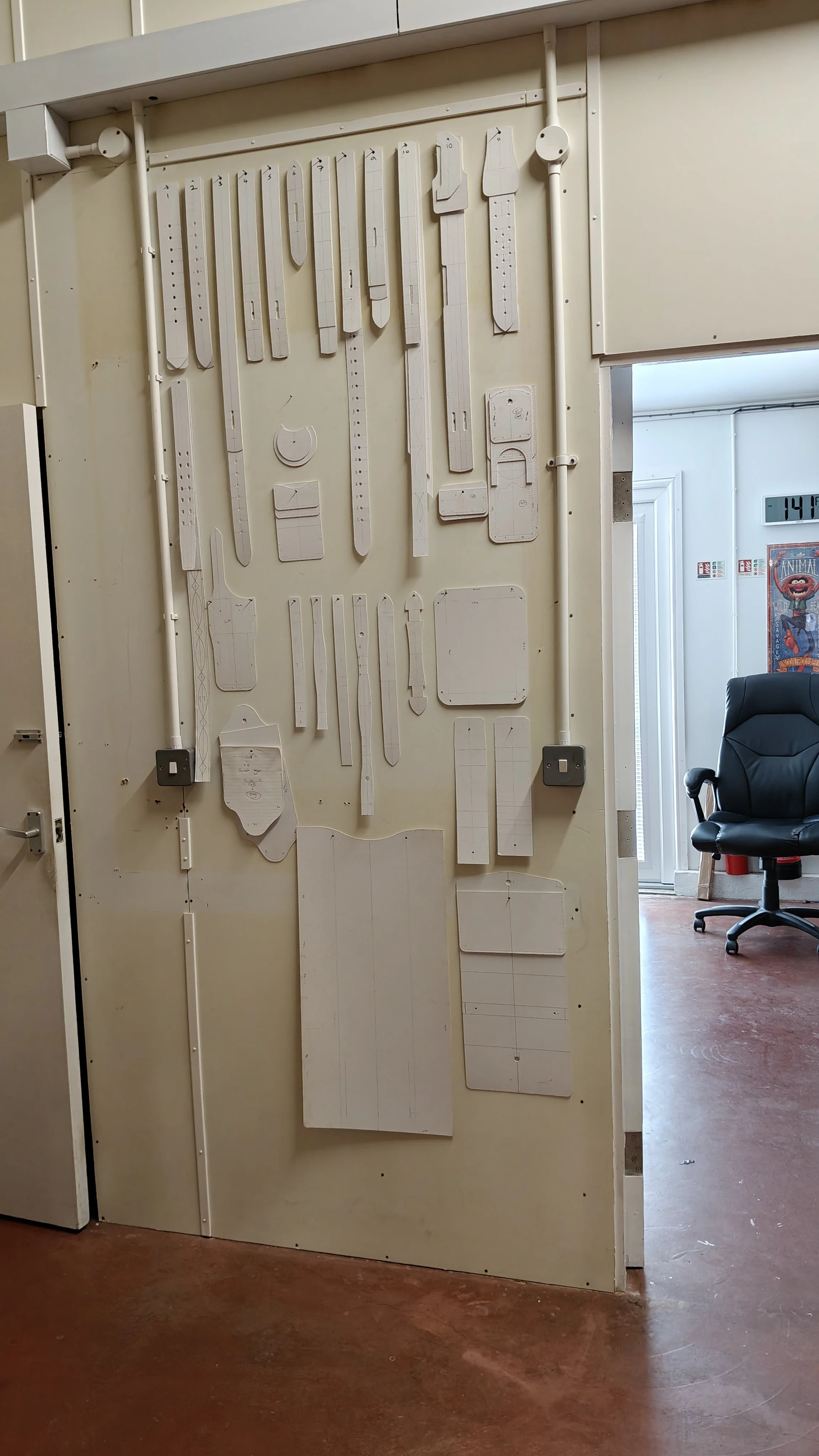
Before making the actual belt, we focused on creating templates, taking measurements and finding the optimal stance in relation to the tools and the work in front of us.
Sometimes, Nigel would demonstrate something right before my eyes, and seconds later, it was my turn. Other times, I had to show him how I would approach the task myself.
A great way of teaching, if you ask me.
Yes, I travelled all the way to Nigel to see him demonstrate his methods. But having to show him your own way of working throws you in at the deep end. He sees what could be improved, and that's exactly what I signed up for.
To learn from the best.
His forty years of experience are something you can feel throughout the workshop, both in his way of working and in his presence.
Every problem I've encountered, or that someone else has brought to him, is something Nigel has probably tackled time and time again over the years.
What you get is more than a demonstration of technique. You get the philosophy behind his way of working.
He told me that teaching had allowed him to distil his knowledge into something that others could understand and put into practice, regardless of their skill level.
I experienced that firsthand.
No matter how difficult something seemed, and no matter how many metaphors he used to explain it, he could break it down into something much simpler.
To me, that's a sign of true mastery.
With my template made and cut out of cardboard, it was time to put it to the test.
We cut and creased the leather, creating that distinctive line near the edges. We punched the stitching holes and shaped the end of the belt. I chose a tapered tip.
And before we knew it, day two had already come to an end.
I was prepared for that. I knew I'd finish the belt back home. But as I mentioned earlier, the greatest thing I took away from those two days wasn't a finished belt.
It was the experience.
In Japan, there are several traditional arts and practices whose names end in -dō, meaning "way" or "path". Think of Budō(The way of martial arts), Kadō(The way of flowers), Kyūdō(The way of the bow) or Iaidō(The way of the sword). Each has its own discipline, philosophy and way of doing things.
And for that reason, I'd say Nigel has developed something of his own.
Nigeldō.
I'm very glad I had this opportunity to meet Nigel and learn from him.
If you're considering doing something similar, do it. You won't regret it.
Thank you for everything, Nigel. For the experience, the knowledge and wisdom you've shared with me, the laughs and the great conversations.
And, of course, for the excellent cigar we smoked together.
Until next time!